
How to cite this article / Come citare questo articolo
Sabeti, M. (2026). The Strait of Hormuz after the Ramadan War: Iran’s Legal Position and the International Law of the Sea. Aequitas Magazine, 11, 13-28.
DOI: https://doi.org/10.5281/zenodo.24002805
ABSTRACT The Strait of Hormuz is one of the world’s most important international waterways, playing a pivotal role in global energy transportation and international trade. Its geopolitical and legal significance has drawn particular attention to the application of different regimes under the law of the sea, especially the regime of transit passage. This study examines the legal position of the Islamic Republic of Iran in the Strait of Hormuz in light of the rules of international law of the sea, the provisions of the 1982 United Nations Convention on the Law of the Sea (UNCLOS), and Iran’s official positions. It also analyses the possibility of levying charges for maritime services within the framework of international law of the sea. Although the regime of transit passage safeguards freedom of navigation through international straits, coastal States retain certain regulatory powers concerning navigational safety, traffic management, and the protection of the marine environment. Furthermore, international legal scholarship distinguishes between transit tolls and charges for services actually rendered. The latter may be permissible under international law, provided that the applicable legal principles are respected and the charges are proportionate to the services provided. The distinction adopted in this article is a qualified one: the existence of a maritime service does not, by itself, establish a right to make payment a condition of passage. The legal basis for the charge, its connection to an identifiable service and its effects upon navigation must be independently assessed.
SUMMARY: 1. Introduction – 2. Literature Review – 3. Theoretical and Analytical Framework – 4. Geopolitical Significance – 5. Geoeconomic Significance – 6. Geostrategic Dimensions – 7. Legal Regime of International Straits – 8. Maritime-Service Charges – 9. Conclusion.
1. Introduction
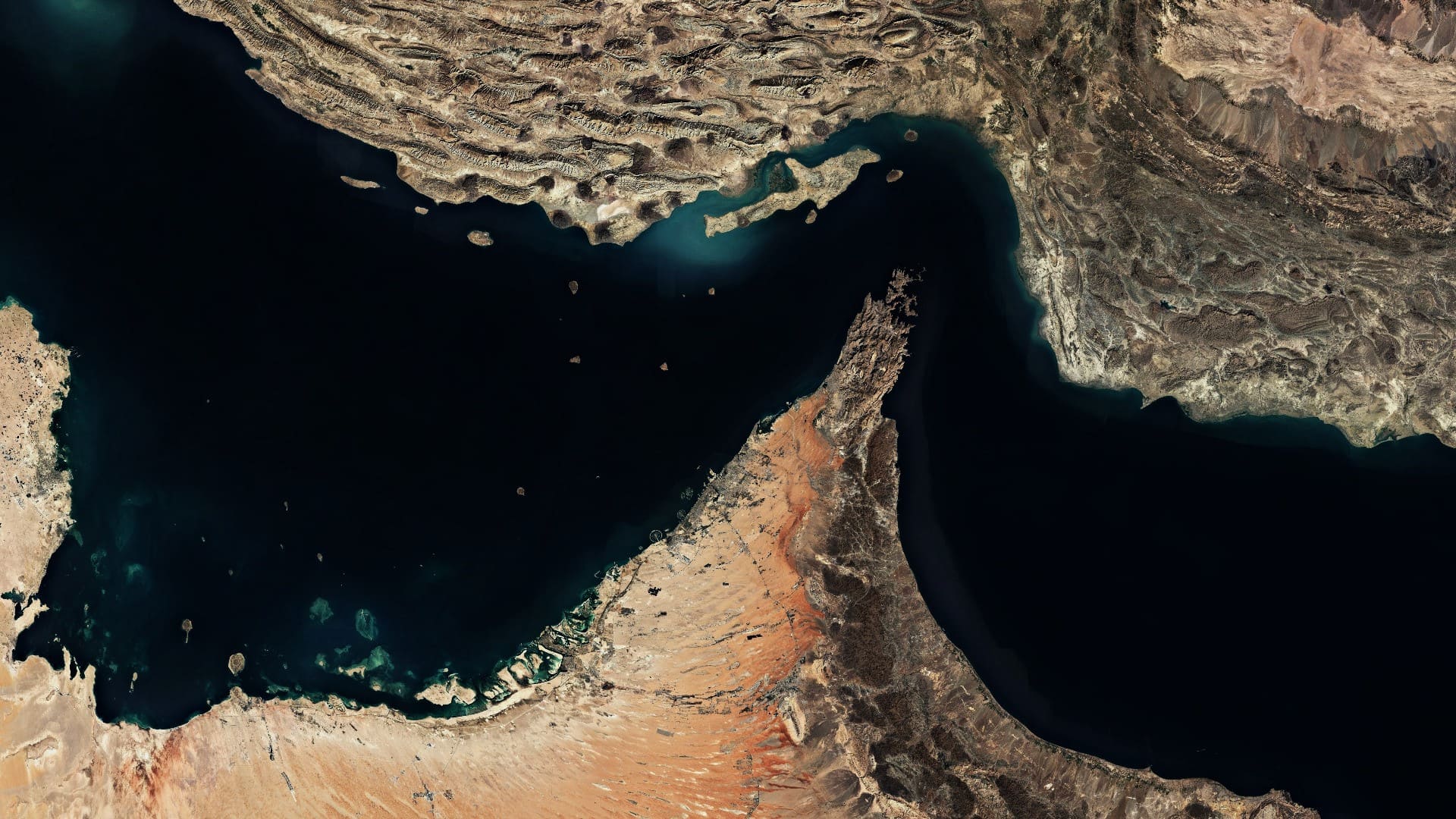
The Strait of Hormuz is one of the most important and strategically sensitive waterways in the contemporary international legal order. Its vital role in connecting the Persian Gulf to the Gulf of Oman has made it a focal point of global energy trade and maritime security. According to international estimates, a substantial share of the world’s oil exports passes through this route, making the Strait of Hormuz not merely a geographical feature but also a complex legal, political, and security issue.
Under the international law of the sea, straits used for international navigation are subject to a specific legal regime, which is governed by Part III of the 1982 United Nations Convention on the Law of the Sea (UNCLOS). This regime seeks to strike a balance between two fundamental principles: on the one hand, the sovereignty of coastal States and, on the other, the freedom of international navigation. Nevertheless, the interpretation of this balance has long been a source of disagreement between coastal States and maritime powers.
In this context, the Islamic Republic of Iran, as one of the principal coastal States bordering the Strait of Hormuz, has consistently emphasised the need to take account of the sovereignty, security, and environmental dimensions of this waterway.
The 1982 United Nations Convention on the Law of the Sea (UNCLOS) is a comprehensive instrument of international law governing maritime affairs. It was adopted in Montego Bay, Jamaica, in 1982, following more than a decade of intensive negotiations within the framework of the Third United Nations Conference on the Law of the Sea. The Convention emerged in response to significant developments in the exploitation of marine resources, the expansion of commercial and military fleets, and growing disputes between coastal States and maritime powers. One of the most contentious issues during its negotiation was the determination of the legal regime governing passage through international straits. Some States emphasised the principle of territorial sovereignty and the application of the regime of innocent passage, whereas others insisted on safeguarding freedom of navigation through vital international routes. The resulting Convention established the regime of transit passage in Part III as an attempt to reconcile the sovereignty of coastal States with the requirements of international navigation. Nevertheless, the implementation of this regime has continued to give rise to differing interpretations and to political and security tensions between States.
From Iran’s perspective, the Strait of Hormuz is not merely an international passageway; it is an integral part of the country’s vital security and geopolitical environment, where any instability may have direct consequences for national security and the national economy.
It should be noted that the Islamic Republic of Iran is not a party to the 1982 United Nations Convention on the Law of the Sea (UNCLOS). In its interpretative declaration made upon signing the Convention, Iran expressed the view that the provisions governing transit passage should not be available to States that are not parties to the Convention. Iran’s official position is also that the transit passage regime applicable to the Strait of Hormuz does not constitute a generally binding rule of customary international law. Instead, Iran regards innocent passage as the applicable legal basis for passage through its territorial sea. Nevertheless, for the purpose of examining the scope under international law for levying charges for maritime services, this study also considers the provisions of UNCLOS and relevant scholarly interpretations.
For the purpose of the present analysis, treaty provisions, customary international law and Iran’s own interpretative position must be kept analytically separate. Iran’s declaration upon signature of UNCLOS on 10 December 1982 treats transit passage as a contractual advantage created through negotiation, while other States, including the United States, regard substantial aspects of that regime as customary international law (United Nations Treaty Collection, 1982; Kraska, 2014). This divergence cannot be settled merely by invoking the text of UNCLOS against a non-party. The existence and scope of any customary obligation require an assessment of sufficiently general State practice together with acceptance as law, in accordance with the International Law Commission’s 2018 conclusions. Iran’s objection is therefore relevant evidence of its legal position, but it does not, by itself, establish the content of the general customary rule.
The fundamental challenge in the international law of the sea lies in determining the precise boundary between sovereignty and the limitations arising from the applicable passage regime. This gives rise to the central question: are coastal States bordering international straits merely passive observers of maritime traffic, or do they retain active regulatory, supervisory, and even financial powers?
The imposition of charges on vessels passing through international straits is another contentious issue in the law-of-the-sea literature. While some traditional interpretations regard any charge imposed merely for passage as inconsistent with the principle of freedom of navigation, other, more recent approaches distinguish between transit tolls and charges for maritime services, seeking to identify a legal basis for a more active role for coastal States.
Accordingly, the present study is not confined to a theoretical examination of the passage regime. Rather, it addresses a more fundamental question: to what extent does contemporary international law permit the scope of coastal State sovereignty over international straits to be reconceptualised, particularly with regard to the regulation of passage and the levying of charges for services?
Recent regional security developments, particularly the Ramadan War and its consequences, have further underscored the importance of reassessing the Islamic Republic of Iran’s legal policy concerning the Strait of Hormuz. These developments have heightened concerns about maritime security and brought the Strait’s significance as an element of Iran’s deterrence and national interests into sharper focus. Although the Ramadan War did not, in itself, alter the legal regime governing international straits, it has reinforced the need to examine how existing capacities under international law may be used to exercise regulatory powers, ensure navigational safety, protect the marine environment, and provide public maritime services.
Focusing on the Strait of Hormuz, this article adopts an analytical approach grounded in international legal scholarship to examine whether, despite the constraints imposed by the transit passage regime, international law leaves scope for coastal States to exercise regulatory and economic powers. In this context, the distinction between the prohibition on transit tolls and the permissibility of charges for services actually rendered is central to the legal analysis.
2. Literature Review
Previous studies on the Strait of Hormuz have mainly examined its geopolitical, strategic, security, and historical significance. Recent research has focused on the potential closure of the Strait, its legal and political implications, and its role in regional deterrence (Esmaeili and Heydari, 2025; Ahmadi-Nejad et al., 2025). Earlier studies addressed Iran’s defence capabilities and the geostrategic importance of the Strait and the Makran coast (Biravand, 2023; Karami, 2020). Other research examined Iran–Oman relations and the historical and geopolitical significance of the Persian Gulf (Naderizadeh et al., 2021; Jafari Valdani, 1992, 1997; Faleh-Tabar, 1992).
Despite these contributions, limited attention has been paid to an integrated legal analysis of the transit passage regime and the extent to which coastal States, particularly Iran, may impose charges for maritime services. This study seeks to address this research gap.
The most closely related recent legal discussion includes Kraska’s study of the conflicting Iranian and United States approaches to the Strait (2014), Southey’s analysis of the proposed Iranian regulatory regime (2026), and Mohamed’s examination of the distinction between transit tolls and service charges (2026). Mohamed specifically addresses Articles 26, 42 and 43 UNCLOS and the historical treatment of passage charges. Consequently, the contribution of the present article cannot rest upon claiming that the distinction itself has received no attention. Its more specific purpose is to examine that distinction through the interaction of Iran’s interpretative declaration, coastal-State regulatory responsibilities and the practical conditions under which a service-related charge could be defended. In this respect the inquiry remains legal and evaluative, rather than a validation of any particular governmental measure.
3. Theoretical and Analytical Framework of the Study
3.1. The Theory of Balancing Coastal State Sovereignty and Freedom of Navigation
The theoretical foundation of this study rests on the premise that the international law of the sea seeks to establish a balance between two competing interests: on the one hand, safeguarding the sovereignty, security, and interests of coastal States; and on the other, ensuring the free flow of navigation and international maritime communications.
Within this framework, the sovereignty of a coastal State is not absolute. Although a coastal State exercises sovereignty over its territorial sea, the exercise of that sovereignty must remain consistent with the recognized rights of foreign ships. For example, under the regime of innocent passage, the United Nations Convention on the Law of the Sea (UNCLOS) recognizes the right of ships of all States to pass through the territorial sea, while also allowing the coastal State to adopt regulations in areas such as navigational safety, environmental protection, and the regulation of maritime traffic.
This rationale applies even more strongly to international straits. Under the regime of transit passage, coastal States retain regulatory powers; however, these powers must not be exercised in a manner that effectively denies, impedes, or restricts the right of transit passage. Article 42 of UNCLOS authorizes coastal States to adopt regulations concerning matters such as navigational safety, maritime traffic management, and the prevention and control of pollution. Nevertheless, the same article stipulates that such regulations must not have the practical effect of denying or impairing the right of transit passage.
3.2. The Theory of the Coastal State’s Limited Regulatory Jurisdiction
Within this framework, a distinction can be drawn between the sovereign authority and the regulatory authority of a coastal State. A coastal State cannot, merely by virtue of its sovereignty over the territorial sea, impose any type of restriction or financial or administrative obligation on ships in transit. The exercise of a coastal State’s authority in international straits must remain within the framework of the legal regime governing passage.
From this perspective, coastal State regulations are more likely to be legitimate when they are directly related to recognized objectives of international law, including navigational safety, environmental protection, maritime traffic management, and the provision of specific maritime services. Conversely, any measure whose primary purpose or effect is to transform the “right of passage” into a permission conditional upon the consent of the coastal State, or to create an economic obstacle to passage, requires closer scrutiny regarding its compatibility with the legal regime governing international straits.
3.3. The Theory of the Mutual Limitation of Sovereignty and Freedom of Navigation
Under this approach, the relationship between the coastal State and States using the Strait can be analyzed as one of mutual limitation. The coastal State is required to refrain from measures that unjustifiably impede international passage. Conversely, foreign ships are required, while transiting, to comply with the coastal State’s legitimate and non-discriminatory regulations, as well as generally accepted rules concerning navigational safety and environmental protection.
This relationship is reflected in Articles 39 and 42 of the United Nations Convention on the Law of the Sea (UNCLOS). Ships exercising transit passage must proceed through the Strait without delay and comply with generally accepted international regulations concerning navigational safety and the prevention of pollution. In return, coastal States may not adopt regulations that, in practice, deny or impair the right of transit passage.
Accordingly, this study will assess the legality of any restrictive policy adopted by Iran not solely on the basis of claims to territorial sovereignty, but according to three criteria: the objective of the regulation, the nature of the restriction, and its practical effects on international passage.
Methodologically, the analysis uses a doctrinal comparison of the applicable treaty rules, official interpretative declarations, international judicial reasoning, available State practice and recent legal scholarship. It distinguishes reported proposals from rules conclusively enacted or implemented, and stated governmental objectives from the actual legal and practical effects of a measure. Where the available record does not establish the precise service supplied, the vessel charged, or the conditions of enforcement, the legal assessment remains conditional.
3.4. Analytical Framework of the Study on the Strait of Hormuz
Based on the foregoing discussion, the theoretical framework of this study rests on the premise that Iran’s legal policy toward the Strait of Hormuz can be analyzed along a spectrum ranging from “the exercise of sovereignty” to “the safeguarding of freedom of navigation.” At one end of this spectrum lie Iran’s sovereign, security, and economic interests, while at the other lie the rights of States and foreign vessels to use international maritime routes.
From this perspective, four key questions constitute the criteria for evaluating Iran’s legal policy:
1. Does the Strait of Hormuz qualify as a strait used for international navigation under the international law of the sea?
2. What legal regime governs the passage of ships through the Strait?
3. To what extent may Iran, as a coastal State, regulate or restrict the passage of foreign ships?
4. Are Iran’s financial, administrative, or security measures intended to facilitate the provision of legitimate maritime services, or do they effectively restrict the right of passage?
4. The Geopolitical and Strategic Significance of the Strait of Hormuz
The Strait of Hormuz, one of the world’s most strategically important maritime passages, plays a fundamental role in international trade, particularly in the transportation of energy. A significant proportion of the world’s oil and gas exports passes through this strait, making the global economy structurally dependent on its security and stability. Its geographical location between the Islamic Republic of Iran and Oman further enhances its geopolitical significance, transforming it into one of the most strategically sensitive areas in the international system. In the event of heightened tensions, the strait could become a high-risk route for maritime traffic, posing a serious threat to navigational safety and the continuity of global energy supplies.
The principle of transit passage is provided for under the 1982 United Nations Convention on the Law of the Sea (UNCLOS) with respect to straits used for international navigation. However, because the Islamic Republic of Iran is not a party to the Convention and in light of its official position, Iran has not accepted the transit passage regime as a binding rule of customary international law and maintains that the regime of innocent passage applies in its territorial sea. Accordingly, the passage of foreign vessels must take place within the framework of international law and in compliance with the applicable regulations of coastal States. Coastal States may adopt and enforce regulations in this regard, subject to the limits imposed by the relevant rules of international law.
Historically, the strategic location of the Strait of Hormuz has led Iran and Oman to attach considerable importance to controlling the surrounding coastlines and maritime routes. In historical naval strategies, control of the strait was regarded as a key element of maritime power, while dominance over it was associated with access to commercial routes and the ability to exert influence over regional and global affairs.
During various historical periods, including the Achaemenid, Parthian, and Sasanian eras, Iran’s presence and influence in the areas surrounding the Strait of Hormuz and the Gulf of Oman have been documented. During these periods, the region was considered part of Iran’s sphere of political and military influence. Economic objectives, particularly control over trade routes, and military objectives, including countering rival maritime powers, played an important role in the policies pursued at the time.
5. The Geoeconomic Significance of the Strait of Hormuz and the Role of Energy in Its Strategic Importance
From an economic perspective, the Strait of Hormuz is one of the world’s most significant geopolitical and geoeconomic chokepoints. Its role extends far beyond that of a mere geographical passage. It constitutes a critical component of the global energy trade network and serves as one of the most sensitive links between energy producers and consumers worldwide. The strait’s importance stems primarily from the structural dependence of global oil and gas markets on the uninterrupted flow of energy through this waterway. Consequently, any disruption to its operation could have immediate and far-reaching repercussions for the global economy. From an energy perspective, the Strait of Hormuz is a major route for transporting crude oil and liquefied natural gas (LNG) from the Persian Gulf states to international markets. A substantial proportion of the energy exports of regional producers, including Saudi Arabia, Iraq, the United Arab Emirates, Kuwait, and Qatar, passes through this passage. This dependence has made the Strait of Hormuz a key component of global energy security, with any tension or instability in the area quickly reverberating through international energy markets.
The International Energy Agency’s February 2026 factsheet provides a more precise quantitative reference point: in 2025, an average of approximately 20 million barrels per day of crude oil and oil products moved through the Strait, representing around one quarter of world seaborne oil trade. The same source estimates LNG movements through the Strait at just over 112 billion cubic metres in 2025, close to one fifth of global LNG trade (IEA, 2026). These figures should not be confused with the percentage of all oil produced or consumed worldwide, and illustrate the need to identify the denominator and reporting year when describing the Strait’s economic importance.
The strait’s significance is even more pronounced in the liquefied natural gas sector. A substantial share of global LNG trade passes through this route, and countries such as Qatar, one of the world’s largest LNG exporters, depend heavily on the security of this waterway. As the global LNG market has become increasingly competitive, with the participation of major suppliers such as the United States, Russia, Australia, and other emerging producers, any disruption to traffic through the Strait of Hormuz could rapidly alter market shares and intensify global price volatility. Qatar’s structural dependence on this route has therefore made stability in the Persian Gulf a strategic necessity for the country
Another important characteristic of the Strait of Hormuz is the limited availability of effective alternative routes. Although some countries have developed pipelines in recent years to reduce of this period. Iranian policy sought to establish and maintain control over the Strait of Hormuz, which required control over the coastlines on both sides of the strait. This strategic objective, according to the cited account, made Oman’s inclusion within Iranian territory necessary and led to the characterization of the Strait of Hormuz as an internal strait of Iran. Iran’s exercise of authority over the strait pursued two principal objectives: economic control over commercial transportation routes and military resistance to the maritime powers of the time, including the Greeks, Romans, and Ottomans. their dependence on maritime routes through the strait 1, the capacity of these pipelines remains limited compared with the region’s substantial energy export volumes. Such infrastructure entails considerable construction and maintenance costs, and its capacity is insufficient to accommodate the entire volume of regional energy exports. These pipelines therefore serve primarily as supplementary routes rather than complete substitutes for maritime transportation 2
A substantial proportion of global oil trade continues to depend on maritime transportation, and the Strait of Hormuz occupies a particularly important position in this network. Any disruption to this route would affect not only producing countries but also major energy-consuming economies in Asia, Europe, and even the United States. Countries such as China, India, Japan, and South Korea obtain a significant share of their energy imports through this route, reinforcing global economic interdependence.
The distribution of oil trade by destination varies by year and by the definition of the flows measured; no percentage-based chart is reproduced here because the numerical series in the source manuscript was not supported by a traceable dataset.
Although the Strait of Hormuz geographically separates Iran and Oman, it also functions as an important maritime link between the two countries and has influenced their political and economic relations. Similarly, the Bosporus Strait in Türkiye connects the Black Sea to the Sea of Marmara while separating Europe from Asia, and it is recognized as an important route for international shipping. The Strait of Malacca in Southeast Asia is another major maritime corridor for global oil transportation, carrying a substantial volume of international energy trade. Likewise, the Strait of Gibraltar, a strategic passage between the Mediterranean Sea and the Atlantic Ocean, plays an important role in intercontinental maritime transit and is subject to an international legal regime governing passage by vessels. These straits simultaneously perform geopolitical, economic, and connectivity functions.
6. Geostrategic Dimensions and Security Implications of the Strait of Hormuz in the International System
Alongside its geoeconomic significance, the Strait of Hormuz occupies a prominent position in geostrategic calculations and international security. Owing to its location at the junction of the Persian Gulf, the Gulf of Oman, and the Indian Ocean, the strait holds considerable strategic importance. In geopolitical literature, straits are often described as strategic chokepoints because control over them can directly affect global trade flows and the balance of power among States. Within this framework, the Strait of Hormuz serves a purpose that extends beyond maritime transportation, functioning as a strategic instrument within the international system.
6.1. The Impact of the Ramadan War on the Redefinition of the Islamic Republic of Iran’s Legal Policy in the Strait of Hormuz
The Ramadan War and the resulting security developments, although they did not, according to some countries, alter the legal regime governing straits used for international navigation under international law, made it increasingly evident that the Islamic Republic of Iran needed to reconsider how it exercises its sovereign rights and jurisdiction over the Strait of Hormuz. The war demonstrated that the security of the Strait of Hormuz is not merely a matter of freedom of navigation or international trade; rather, it is directly linked to national security, defensive deterrence, energy security, and regional stability. Accordingly, Iran’s legal policy has increasingly focused on utilizing the existing capacities of international law to safeguard national interests, manage this strategic passage through legal mechanisms, and ensure maritime safety.
The terminology ‘Ramadan War’ is retained as used in this manuscript to describe the hostilities and their consequences in 2026; it is not employed as a separate category of international law. The legal status of the Strait must accordingly be assessed independently from the political description of the conflict. Moreover, a proposal to collect revenue for general reconstruction, strategic deterrence or compensation for wartime damage must be distinguished from a narrowly calculated charge for a specific service rendered to an identifiable ship. The former objectives do not become maritime services merely through a change in terminology.
In this regard, Nevitt (2026) argues that recent military tensions in the Persian Gulf, although they have not altered the legal regime of transit passage, have created new challenges concerning the exercise of jurisdiction by coastal States and the safeguarding of maritime security in international straits.
Furthermore, recent developments have demonstrated the need to draw a clear distinction between the exercise of the coastal State’s lawful jurisdiction and the imposition of restrictions on freedom of navigation. Accordingly, the Islamic Republic of Iran’s stated legal policy should not automatically be interpreted as an attempt to restrict the passage of vessels. Its compatibility with international law depends on the content and practical effects of specific measures. As presented by Iranian authorities, it should be understood as an effort to make effective use of the recognized capacities of international law to ensure the safe, orderly, and sustainable management of the Strait of Hormuz. By emphasizing the coastal State’s jurisdiction in areas such as navigational safety, environmental protection, search and rescue, maritime traffic control, and the provision of public services, this approach seeks to establish a balance between the principle of freedom of navigation and the coastal State’s responsibility to maintain security in this international waterway.
An opposing interpretation must also be taken into account. In April 2026 the International Maritime Organization warned that introducing tolls in an international strait would create a dangerous precedent, emphasising the protection of passage under the law of the sea (Reuters, 9 April 2026). Contemporary commentary likewise questions the compatibility of compulsory permission requirements and charges calculated without reference to individual services with the rights of transiting vessels (Southey, 2026). These objections do not eliminate coastal-State jurisdiction over safety and pollution; they require a closer inquiry into the legal basis, economic design and enforcement of each measure.
The continued security of global energy supplies requires a strengthened role for coastal States in managing strategic waterways. Under such circumstances, the provision of services such as maritime traffic guidance and control systems, environmental risk monitoring, search and rescue, marine pollution response, improvements to safety infrastructure, and emergency management may be regarded as serving not only Iran’s national interests but also those of the international community. According to a report published by Reuters (2026), the question of charging for maritime services in the Strait of Hormuz has become an important issue in the international law of the sea and has also prompted a response from the International Maritime Organization. This development underscores the importance of precisely defining the limits of coastal States’ jurisdiction in providing maritime services and collecting associated fees within the framework of international law.
7. The Legal Regime of International Straits and the Status of the Strait of Hormuz
The legal regime governing international straits has developed through the gradual evolution of the international law of the sea and a series of international conferences. Initial efforts in this field were undertaken at The Hague Conference of 1930, followed by the Geneva Conferences of 1958 and 1960, and ultimately culminated in the 1982 Conference in Jamaica, which resulted in the adoption of the United Nations Convention on the Law of the Sea. These developments demonstrate the importance of precisely defining the rights and obligations of coastal States and other States in the use of these strategic waterways.
Where a strait connects two parts of the high seas or two exclusive economic zones, foreign vessels enjoy freedom of navigation through it, and passage is not subject to the exclusive sovereignty of the coastal States. However, where a strait lies within the territorial sea of one or more States, the passage of vessels is subject to the applicable right of passage. Such passage must be conducted continuously and in a manner consistent with the public order and security of the coastal State.
With the extension of the territorial sea to 12 nautical miles, many of the world’s major straits came to lie within the territorial waters of coastal States. This development raised concerns that coastal States could temporarily suspend innocent passage on security grounds, potentially restricting international navigation through strategically important straits such as the Strait of Gibraltar and the Strait of Malacca.
7.1. The Legal Basis of Straits, with Particular Emphasis on the Approach of the Islamic Republic of Iran
Under the 1982 United Nations Convention on the Law of the Sea (UNCLOS), particularly Article 37, straits are subject to a specific legal regime when they are used for international navigation between one part of the high seas or an exclusive economic zone and another part of the high seas or an exclusive economic zone. Within this framework, the identification of international straits is determined not merely by geographical considerations but also by functional criteria, particularly their role in the global maritime transportation system.
For straits used for international navigation, Article 37 identifies the geographical and functional setting of the transit-passage regime; Article 38 defines the right of transit passage; Article 39 states the duties of vessels and aircraft; and Articles 41, 42 and 44 regulate the respective rights and responsibilities of States bordering the Strait. Part III is not uniformly reducible to either transit passage or ordinary innocent passage: Article 45 provides for non-suspendable innocent passage in the particular categories of straits that it covers. The distinction matters because Article 25(3), concerning temporary suspensions in ordinary territorial seas, cannot simply be transferred without qualification to an internationally used strait. The precise treaty regime must be identified before any claimed power to regulate or suspend passage is assessed.
Nevertheless, from the perspective of Iran’s legal position, this development does not constitute a fundamental weakening of coastal State sovereignty. Rather, it may be understood as a redefinition of how such sovereignty is exercised in response to international needs. Legal scholarship has likewise emphasized that the regime governing straits seeks to strike a balance between the sovereignty of coastal States and the necessity of maintaining freedom of international navigation (Tanaka, 2019, p. 22).
In this context, the Strait of Hormuz possesses specific legal characteristics that place it among the straits used for international navigation. These characteristics include its location within the territorial waters of Iran and Oman, the high volume of commercial vessels and oil tankers passing through it, its vital role in global energy supplies, and its security and military sensitivities. These factors have placed the legal analysis of the Strait at the intersection of geopolitical and security considerations and the rules of international law.
7.2. The Limits of the Territorial Sea (12 Nautical Miles) and Their Effect on the Legal Regime of the Strait of Hormuz
Under the 1982 United Nations Convention on the Law of the Sea, every coastal State has the right to establish the breadth of its territorial sea up to 12 nautical miles from its baselines. This distance is equivalent to approximately 22 kilometres. In legal terms, this maritime zone is regarded as an extension of the territory of the coastal State. Accordingly, the State exercises extensive, though not unlimited, sovereignty over this area and may enforce its domestic laws in areas such as security, criminal law, customs, economic activities, and environmental protection.
Despite this broad scope of jurisdiction, the sovereignty of a coastal State over its territorial sea is not absolute or unrestricted. To balance the interests of coastal States with those of the international community, international law recognizes the institution of innocent passage. Under this principle, foreign ships have the right to pass through the territorial sea of a State, provided that their passage is continuous and expeditious and does not prejudice the peace, good order, or security of the coastal State. The territorial sea therefore constitutes a maritime zone in which national sovereignty operates alongside limitations imposed by international law.
The application of the 12-nautical-mile territorial sea rule in this region gives rise to a complex legal structure in the Strait of Hormuz. Since the distance between the Iranian and Omani coasts is relatively narrow in certain areas, the 12-nautical-mile zones of the two States approach or overlap with one another, bringing much of the Strait within their territorial seas. Consequently, this area is neither an entirely free maritime space nor an exclusively national domain. Instead, it constitutes a maritime passage with specific legal characteristics, in which the sovereignty of coastal States coexists with the requirements of international maritime law.
By contrast, major global powers and leading energy-importing countries have consistently emphasized the need to safeguard freedom of passage through this route. They have sought to preserve the uninterrupted flow of maritime traffic through military deployments and collective security arrangements.
The fact that the territorial seas of Iran and Oman extend across much of the Strait of Hormuz does not eliminate the jurisdiction of the coastal States. Even where the transit passage regime applies, coastal States retain certain regulatory powers concerning navigational safety, marine environmental protection, vessel traffic management, and the provision of public maritime services. Accordingly, the central legal question is not whether such jurisdiction exists, but rather the scope and manner of its exercise under international law.
7.3. Legal Regimes Governing Passage through International Straits
The international law of the sea establishes two principal regimes governing the passage of vessels through waters under the sovereignty of States, particularly international straits: innocent passage and transit passage. The distinction between these regimes is not merely technical; it reflects two different approaches to balancing coastal State sovereignty against freedom of international navigation (Churchill & Lowe, 1998, p. 68).
7.3.1. Innocent Passage
Under Article 17 of the United Nations Convention on the Law of the Sea, ships of all States, whether coastal or landlocked, enjoy the right of innocent passage through the territorial sea. Although this regime establishes a right for the international community, it also recognizes significant powers for the coastal State.
Under Article 19, passage is considered innocent so long as it is not prejudicial to the peace, good order, or security of the coastal State (United Nations, 1982). Furthermore, Article 25 provides that the coastal State may take necessary steps in its territorial sea to prevent passage that is not innocent. It also permits the temporary suspension of innocent passage in specified areas of its territorial sea when such suspension is essential for the protection of its security, subject to the conditions laid down in the Convention. These provisions demonstrate the important role of territorial sovereignty in the innocent passage regime and provide part of the legal basis for Iran’s emphasis on the role of the coastal State in managing the Strait of Hormuz.
The customary-law discussion must also take account of the International Court of Justice’s 1949 judgment in the Corfu Channel case. The Court affirmed that, in time of peace, foreign warships may exercise innocent passage through a strait used for international navigation between two parts of the high seas without prior authorization, provided that the passage is innocent (Corfu Channel, 1949, p. 28). The judgment predates UNCLOS and does not decide whether all of the later transit-passage regime has crystallized into customary law. It nevertheless cautions against the proposition that a coastal State may, merely by characterizing a passage as innocent, close an international strait at its discretion.
7.3.2. Transit Passage
A fundamental development in the international law of the sea under the 1982 Convention was the introduction of the transit passage regime for international straits. Under Article 38, all ships and aircraft enjoy the right of transit passage, which must not be impeded or suspended (United Nations, 1982). This provision reflects a shift from the more restrictive innocent passage regime to a broader system designed to protect freedom of navigation.
Article 44 further stipulates that States bordering straits shall not hamper or suspend transit passage. Under this regime, unlike innocent passage, the coastal State does not have the general authority to suspend or broadly restrict passage through the strait.
Nevertheless, Article 42 continues to recognize specific regulatory powers for States bordering straits. Under this provision, such States may adopt laws and regulations relating to navigational safety, maritime traffic regulation, and the protection of the marine environment. The transit passage regime therefore does not eliminate coastal State sovereignty; rather, it entails a functional redefinition and limitation of its exercise.
Article 42(1) should be read according to its enumerated subjects: maritime safety and traffic regulation as provided in Article 41, implementation of applicable pollution-discharge regulations, prevention of fishing by fishing vessels, and the loading or unloading of commodities, currency or persons contrary to specified coastal-State laws. It does not expressly confer a general power to charge ships for traversing the Strait. Under Article 42(2), rules must neither discriminate among foreign ships nor have the practical effect of denying, hampering or impairing transit passage; under Article 44, the passage may not be suspended. Article 41 additionally links traffic separation schemes to the competent international organization. A financial measure therefore requires a basis distinct from a general appeal to the regulatory competence recognised by Article 42.
8. Iran’s Legal Position and the Possibility of Charging Fees for Maritime Services in the Strait of Hormuz
In light of the preceding discussion of passage regimes, the central issue addressed in this section is the scope of the Islamic Republic of Iran’s jurisdiction to charge fees for maritime services in the Strait of Hormuz.
Iran continues to exercise territorial sovereignty over those parts of the Strait of Hormuz that fall within its territorial sea (Article 2 of the United Nations Convention on the Law of the Sea). However, where the transit passage regime applies, this sovereignty operates as a form of functionally constrained sovereignty, meaning that its exercise must not result in the hampering of international transit passage (United Nations, 1982, Article 44).
One of the important issues arising within this framework is the permissibility of charging fees for passage through straits. International law distinguishes between tolls for passage and maritime service fees. The prevailing view is that imposing tolls solely for passage through international straits is incompatible with the principle of freedom of navigation, whereas charging fees for genuine services provided by the coastal State may be legally justifiable.
The relevant treaty text draws an important distinction. Article 26(1) UNCLOS prohibits charges imposed on foreign ships by reason only of their passage through the territorial sea. Article 26(2) permits payment for specific services rendered to a particular ship, subject to non-discrimination. Because Article 26 appears in Part II, within the rules concerning innocent passage, its direct extension to transit passage under Part III is a matter requiring legal justification, not an automatic inference. In turn, Article 43 encourages user States and States bordering a strait to cooperate by agreement in financing navigational and safety aids and measures against vessel-source pollution. It supports cooperative arrangements but does not, on its own, grant unilateral authority to require payment from each transiting vessel (UNCLOS, arts. 26, 42–44).
8.1. The High Volume of Commercial Vessel Traffic
With respect to the Strait of Hormuz, its distinctive geopolitical position and the substantial volume of oil tankers and commercial vessels passing through it require the coastal State to provide a broad range of services, including maritime traffic control, navigational safety services, search and rescue, and marine environmental protection. These services entail substantial costs and require permanent, specialized infrastructure. Accordingly, it may be argued that charging fees proportionate to the services provided—when properly characterized as fees for specific services rather than as passage tolls—could be legally defensible, subject to the applicable rules of international law.
A possible institutional comparison is the Cooperative Mechanism for the Straits of Malacca and Singapore, launched in 2007 and supported by the International Maritime Organization. It coordinates the littoral States, user States and other stakeholders in improving navigation and environmental protection under the cooperation contemplated by Article 43 (IMO, ‘Safety of straits used for international navigation’, FAQ). It is not an example of a compulsory transit toll and should not be presented as one. A corresponding framework in Hormuz would require attention to Iran and Oman, the interests of user States, transparently identified services, and mutually accepted arrangements for funding.
The legality of such charges depends on compliance with three fundamental conditions. First, non- discrimination among vessels, subject to any applicable legal exceptions; second, proportionality between the fees charged and the services provided; and third, the absence of undue impediments to navigation (Churchill & Lowe, 1999). Compliance with these conditions may help ensure that such a mechanism does not conflict with the transit passage regime and may support its acceptance under a flexible interpretation of the international law of the sea.
The resulting legal test is more demanding than a three-part appeal to proportionality, non-discrimination and non-obstruction. First, the authority charging the fee must identify a legally applicable basis for the charge. Second, the service must be specific, real and documented, with a traceable benefit or service rendered to the ship where Article 26 is invoked. Third, the amount and calculation method must be transparent and connected to the service, rather than to the cargo’s commercial value, the vessel’s flag or the mere exercise of the passage right. Fourth, non-payment must not become a mechanism for coercive denial of a passage that the applicable legal regime protects. Finally, charges for general maritime infrastructure should be examined in light of cooperative funding by agreement, rather than assimilated without further justification to individual service fees. The law relating to warships, sovereign immunity and conduct during armed conflict raises additional issues beyond the present article’s commercial-shipping focus.
9. Conclusion
The analysis of the legal regime governing the Strait of Hormuz demonstrates that the international law of the sea seeks to strike a balance between two fundamental principles: the sovereignty of coastal States and freedom of international navigation. Although the 1982 United Nations Convention on the Law of the Sea (UNCLOS) establishes a transit passage regime for straits used for international navigation, the Islamic Republic of Iran has not acceded to the Convention and has consistently maintained that it does not accept the right of transit passage as a binding rule of customary international law. With regard to the Strait of Hormuz, Iran emphasizes the application of its own regulations within the framework of territorial sovereignty and the innocent passage regime. Accordingly, Iran’s legal position must be analyzed in light of this official stance, while references to the Convention’s provisions are justified primarily for comparative analysis and the examination of developments in international law.
At the same time, even assuming the applicability of certain customary rules of the international law of the sea, an examination of Articles 37–44 of the Convention indicates that the transit passage regime does not abolish or entirely eliminate the jurisdiction of coastal States. Rather, it regulates and constrains the exercise of that jurisdiction. Coastal States therefore retain specific legal powers in areas such as navigational safety, maritime traffic management and control, marine environmental protection, search and rescue, and the provision of public maritime services. On this basis, Iran’s role should be understood as extending beyond that of a passive observer and should instead be analyzed in terms of a “regulatory actor” participating in the management of this strategic passage within the limits established by international law.
From the perspective of the international law of the sea, a distinction must be drawn between “transit tolls” and “maritime service fees.” Charging vessels solely for passing through a strait is inconsistent with the principles governing freedom of navigation. However, fees charged for genuine, necessary, and verifiable services may have a legal basis in particular circumstances, provided that the principles of non-discrimination, proportionality, and transparency are respected and that a direct relationship exists between the services provided and the fees collected. Given the substantial volume of oil tankers and commercial vessels passing through the Strait of Hormuz, together with the considerable costs associated with maritime traffic management, navigational services, search and rescue, marine pollution response, and navigational safety, the Islamic Republic of Iran could examine the recovery of costs of specific services genuinely rendered to ships, and cooperative funding for general maritime safety infrastructure, subject to the distinct legal conditions governing each arrangement.
The developments arising from the Ramadan War have also demonstrated that the security of the Strait of Hormuz is not merely a matter of freedom of navigation but is directly connected to national security, energy security, and regional stability. Although these developments have not altered the rules of the international law of the sea, they have further underscored the need to reconsider the Islamic Republic of Iran’s legal policy and make more active use of existing mechanisms under international law to exercise regulatory jurisdiction, improve navigational safety, and develop public maritime services. Within this framework, Iran’s legal policy following the Ramadan War should be understood as directed toward strengthening the regulatory role of the coastal State and making more effective use of existing legal instruments to safeguard national interests, subject to verification that individual measures do not restrict the principle of freedom of navigation.
On this basis, a “middle-ground approach” can be identified in the Islamic Republic of Iran’s legal policy toward the Strait of Hormuz. Such an approach would emphasize Iran’s sovereignty and security considerations while drawing upon the mechanisms available under international law to manage this strategic waterway and provide public maritime services. Implementing this approach requires the development of clear, transparent, and internationally consistent legal mechanisms that safeguard the rights of the coastal State while helping to prevent legal disputes.
The ‘middle-ground approach’ is consequently best understood as a proposal subject to legal safeguards, rather than as a finding that every service-related charge is already authorized. It may offer a path for financing maritime safety if based upon specific services or genuine cooperation among the States concerned. It cannot be used to reclassify an access toll, compulsory transit permit, or measure discriminating against particular vessels as a lawful maritime-service charge merely by changing the terminology. Further empirical examination of the services actually rendered and the method of collection is necessary before reaching a conclusion concerning any specific Iranian measure.
REFERENCES
References retained from the original manuscript
Sharifi, Mohammad Hossein (2023). “A Legal Analysis of the Transit Passage Regime in the Strait of Hormuz in Light of the 1982 United Nations Convention on the Law of the Sea.” Tehran Journal of International Law.
Rezaei, Hassan (2022). “An Examination of the Geopolitical Significance of the Strait of Hormuz in Global Energy Security.” Foreign Policy Journal, University of Tehran.
Karimi, Saeed (2024). “Coastal State Sovereignty and Its Limitations in International Straits.” Journal of Public Law Research.
Ahmadi, Reza, and Mehdi Nikfar (2023). “A Comparative Study of the Legal Regime of International Straits, with Particular Emphasis on the Strait of Hormuz.” Journal of Maritime Law Studies.
Mousavi, Ali (2022). “Iran’s Role in the Security of the Strait of Hormuz and Its Legal Challenges.” Persian Gulf Strategic Studies Journal.
Hosseini, Fatemeh (2024). “An Examination of the Concepts of Innocent Passage and Transit Passage in the International Law of the Sea.” Dadgostar Legal Journal.
Salehi, Mehdi (2023). “The Strait of Hormuz and the Conflict Between National Sovereignty and Freedom of Navigation.” Journal of International Law and Relations.
Ebrahimi, Zahra (2022). “The Law of the Sea and Security Challenges in the Persian Gulf.” Journal of International Law Research.
Karami, Mehran (2025). An Examination of the Political Geography of Straits, Focusing on the Strategic Strait of Hormuz, p. 13.
Jafari Valdani, Asghar (1992). A Historical Overview of the Iranian Islands of Greater Tunb, Lesser Tunb, and Abu Musa. Tehran: Office of Political and International Studies.
Jafari Valdani, Asghar (1997). “The Geopolitics of the Strait of Hormuz and Iran–Oman Relations.” Political Science Research Quarterly, 5(3).
Faleh-Tabar, Nasrollah (1992). “The Strategic Strait and Geopolitics of Hormuz and Iran’s Strategic Role.” New Perspectives in Human Geography Quarterly, 9.
Mojtahedzadeh, Pirouz (1991). “Regional Security in the Persian Gulf: The Course of Past Efforts and Future Prospects.” Political-Economic Journal. Translated by Simin Mojtahedzadeh.
Mehrabi, Alireza (1997). “The Persian Gulf as the Foundation of the Geopolitical- Economic Unity of the Islamic World in the Twenty-First Century.” In Proceedings of the Fourth International Congress of Geographers of the Islamic World.
Khasibi, Mohammad Ebrahim (1994). The Seljuqs and the Oghuz in Kerman. Translated by Mohammad Ebrahim Bastani Parizi. Tehran: Zohuri.
Masoumi-Nejad, Zeinab al-Sadat (1993). “The Political History of the Strait of Hormuz.” In The Persian Gulf: A Historical and Geopolitical Perspective.
Mirzaei, Meysam (2013). An Examination of the Consequences of Closing the Strait of Hormuz. Master’s thesis, Tarbiat Modares University.
Nevitt, M. P. (2026). “Legal and Operational Issues in the Strait of Hormuz: Transit Passage Under Fire.” Just Security, March 15, 2026. Available at SSRN: https://doi.org/10.2139/ssrn.6422118.
Nevitt, M. P. (2026). “Continuing Crisis in Strait of Hormuz: Why Iran’s Hold Is Illegal and U.S. Military Force Alone Fails.” Just Security, April 8, 2026. Available at SSRN: https://doi.org/10.2139/ssrn.6543258.
Nevitt, M. P. (2026). “Five ‘Blockades’ and One Legal Problem: Naval Enforcement in the U.S.–Iran Conflict.” Just Security, May 1, 2026. Available at SSRN: https://doi.org/10.2139/ssrn.6711579.
Massoud, A. (2026). “Iran Wants to Charge Ships to Use the Strait of Hormuz. Can It Legally Do It?” The National, April 23, 2026.
Reuters. (2026). “A Toll for Using Hormuz Would Be a ‘Dangerous Precedent’, UN’s Ship Agency Says.” Reuters, April 9, 2026.
Reuters. (2026). “UN Shipping Agency Opposes Fees for Any Strait, After Trump Plans Hormuz Charge.” Reuters, July 13, 2026.
Tanaka, Y. (2019). The International Law of the Sea (3rd ed.). Cambridge University Press.
United Nations. (1982). United Nations Convention on the Law of the Sea (UNCLOS).
International Energy Agency (IEA). (2025–2026). Strait of Hormuz Factsheet.
U.S. Energy Information Administration (EIA). Data and Analysis on the Strait of Hormuz.
Additional primary sources and scholarly references
Churchill, R. R., and Lowe, A. V. (1999). The Law of the Sea (3rd ed.). Manchester: Manchester University Press.
International Court of Justice (1949). Corfu Channel (United Kingdom v. Albania), Merits, Judgment of 9 April 1949, I.C.J. Reports 1949, p. 4 (especially p. 28).
International Law Commission (2018). Draft Conclusions on Identification of Customary International Law, with Commentaries, UN Doc. A/73/10.
International Maritime Organization (IMO). Safety of Straits Used for International Navigation: Frequently Asked Questions (including the Malacca and Singapore Cooperative Mechanism).
International Energy Agency (IEA) (2026). Strait of Hormuz Factsheet, updated February 2026.
Kraska, James (2014). “The Legal Vortex in the Strait of Hormuz.” Virginia Journal of International Law, 54, p. 323 et seq.
Mohamed, Hashim (2026). “Charges for Passage in the Strait of Hormuz: The Law Governing Tolls and Service Fees in Straits Used for International Navigation.” ASIL Insights, 30(10), 15 October 2026.
Rothwell, Donald R., and Stephens, Tim (2016). The International Law of the Sea (2nd ed.). Oxford / Portland: Hart Publishing.
Southey, Safia K. (2026). “Codifying Coercion: Iran’s ‘New Legal Regime’ and the Law of International Straits.” EJIL: Talk!, 20 April 2026.
United Nations (1982). United Nations Convention on the Law of the Sea, arts. 17, 19, 25–26, 34–45.
United Nations Treaty Collection (1982). United Nations Convention on the Law of the Sea: Status, signature and interpretative declaration of the Islamic Republic of Iran, 10 December 1982.
Mohamad Sabeti
